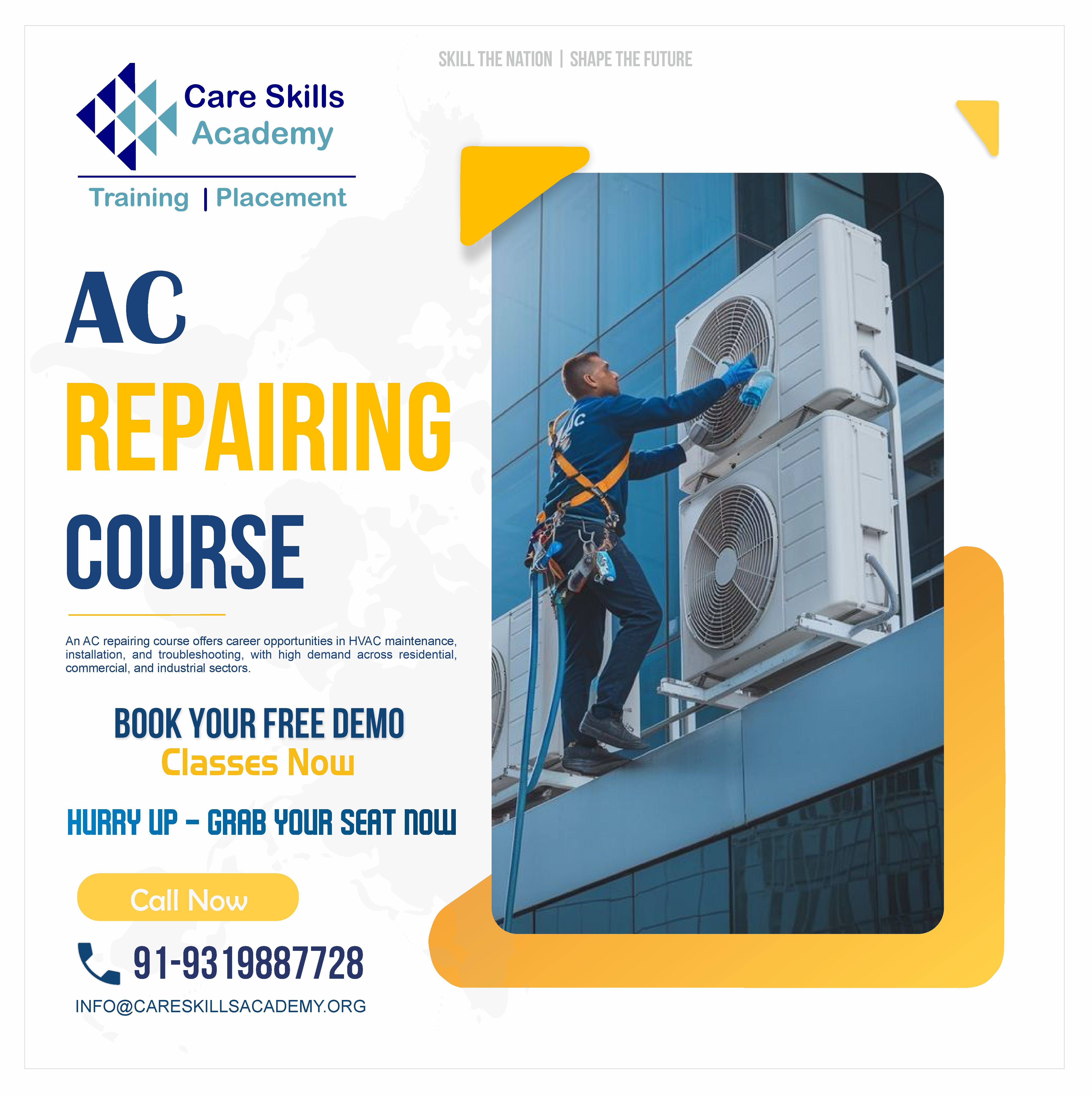
 AC Repairing Course: A Complete Guide to Building a High-Demand Technical Career
In today’s fast-growing world, air conditioners have become a basic necessity in homes, offices, shops, hospitals, and commercial spaces. With the rising use of air conditioning systems, the demand for skilled AC technicians has increased more than ever. This is why an AC Repairing Course is one of the most rewarding and job-oriented technical courses available for students, working professionals, or anyone interested in developing a strong career in the HVAC industry.
An AC Repairing Course is designed to provide complete knowledge of air conditioning systems, covering both theoretical concepts and practical training. Students learn how AC units work, common faults, troubleshooting techniques, and hands-on repair skills. Whether it’s window AC, split AC, inverter AC, or commercial refrigeration systems, the course gives learners the confidence to handle real-world repair tasks.
What You Learn in an AC Repairing Course
1. Basics of Refrigeration & Air Conditioning
Students begin by understanding the fundamentals of cooling systems—heat transfer, refrigerants, pressure levels, and the complete refrigeration cycle. This basic foundation is essential for diagnosing problems accurately.
2. Tools & Equipment Handling
Proper training is given in handling tools like gauges, vacuum pumps, leakage detectors, multimeters, and gas charging equipment. Safety training is also provided to ensure safe and efficient repair work.
3. Installation of AC Units
From selecting installation points to mounting indoor and outdoor units and understanding electrical connections, students learn complete installation techniques for both split and window ACs.
4. Troubleshooting & Fault Finding
A major part of the course focuses on diagnosing problems such as cooling issues, gas leakage, wiring faults, compressor failure, sensor problems, PCB faults, and inverter system errors.
5. Gas Charging & Vacuuming
Students learn how to remove moisture, detect leaks, vacuum the system, and recharge refrigerant gas—an essential skill in AC servicing.
6. PCB Repairing & Inverter Technology
Modern ACs come with inverter-controlled systems. The course includes PCB analysis, testing, replacement, and basic chip-level repair techniques.
7. Practical, Real-Time Training
Hands-on training with actual AC units helps students become job-ready. Practicing with advanced tools and real repair cases builds confidence and skill.
Career Opportunities After AC Repairing Course
Completing an AC Repairing Course opens doors to various job opportunities:
-
AC Technician
-
HVAC Technician
-
AC Installer
-
Service Center Engineer
-
Home Appliance Repair Technician
-
Maintenance Technician in commercial buildings
-
Self-employed freelance technician
Many technicians start their own service center or AMC (Annual Maintenance Contract) business after gaining experience.
Why Choose AC Repairing as a Career?
-
High demand: ACs are used everywhere.
-
Good income potential: Skilled technicians earn excellent monthly income.
-
Low course fees, high returns: Affordable training with strong career growth.
-
Flexible job options: Work at service centers or start your own business.
-
Future-proof skill: With rising temperatures and increased AC usage, demand will only grow.
Conclusion
An AC Repairing Course is a powerful opportunity to build a stable, rewarding, and in-demand technical career. With the right training, practical skills, and dedication, anyone can become a successful AC technician and secure a bright future in the HVAC industry.
If you want, I can also write a Facebook ad, Google ad copy, brochure content, or WhatsApp message for this course.